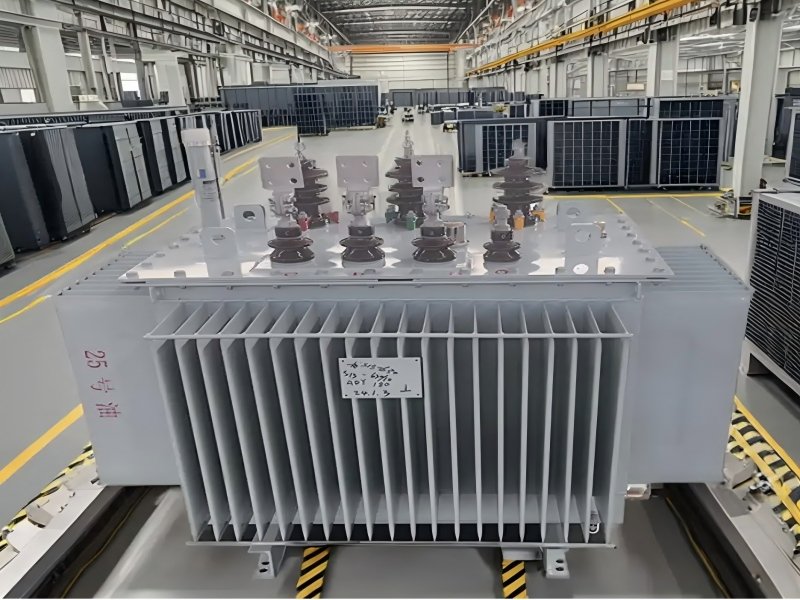
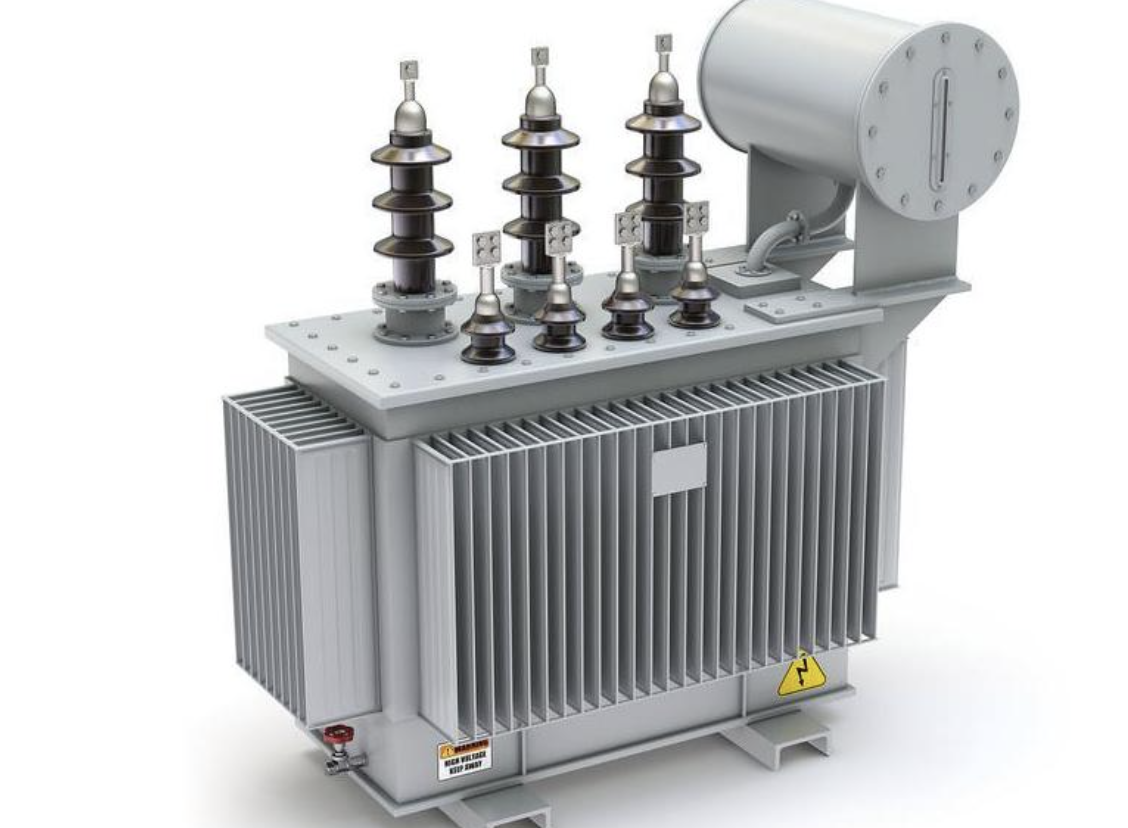
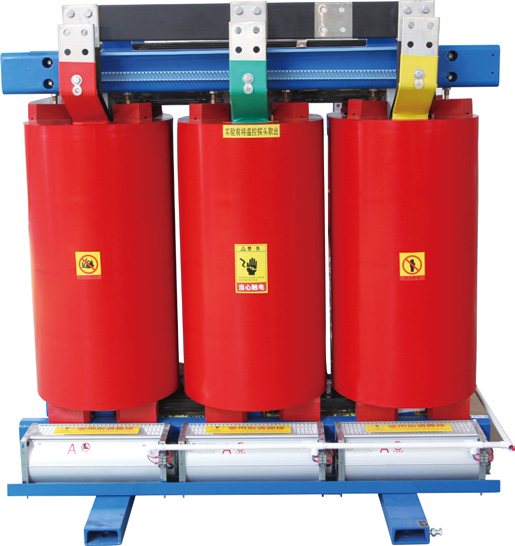
Musk was right! The item the world is scrambling to get on is, a Chinese distribution transformer .
News 2026-05-08
As the AI race reaches its final stages, why did the outcome hinge on an old-fashioned transformer? When chips are no longer the bottleneck and power shortages have become the biggest concern for data centers worldwide, how has China’s power grid equipment supply chain emerged as a key supplier amid this buying frenzy?
Huaxia Fund had already begun relevant research internally as early as 2023. At that time, it had predicted that if AI continued to develop, the North American power grid—centered on the United States—would struggle to support AI’s electricity demand. The underlying logic is this: the development of large language models in North America relies on GPU chips from companies like NVIDIA, and these chips consume far more power than traditional chips.
Traditional server racks consume about 30 kilowatts, while NVIDIA’s racks already reach 100 kilowatts and may eventually rise to 200 or even 600 kilowatts. Unlike China, the U.S. shifted its low-end manufacturing to China and Southeast Asia after 2008. For the subsequent 10 to 12 years, U.S. electricity consumption remained largely flat, and there was little demand for grid expansion.
After 2023, however, driven by the reshoring of manufacturing and the development of AI, U.S. electricity consumption returned to a growth rate of approximately 2 percent, creating a corresponding need for grid investment. Since the U.S. had made virtually no grid investments over the past decade, the sudden surge in demand strained the grid’s capacity—particularly in meeting the power needs of AI. Furthermore, unlike China’s large-scale, centralized power grid system, the U.S. grid is operated by private companies and consists of approximately seven major regional grids that are not interconnected. Data centers are often built in technologically advanced, densely populated areas, where power capacity is already nearing saturation.
As AI develops rapidly and the power grid struggles to keep up, companies such as Google, Oracle, and Microsoft have no choice but to build their own power plants and power grids.
Building power plants requires a large amount of electrical equipment. Over the past decade, aside from China’s rapid expansion of its power sector, power grid equipment manufacturers in other countries have generally faced insufficient production capacity. This has led to a severe shortage of grid equipment such as transformers, creating an opportunity for China’s excess production capacity to enter the U.S. market. In terms of scale, electricity can be divided into two categories: power and energy. What the U.S. lacks is power.
China adds approximately 80 GW of new electricity demand annually, while the global total is about 200 GW; previously, the U.S. had virtually no new electricity demand. Based on statistics regarding chip production by NVIDIA and TSMC, powering all these chips would require approximately 30 to 40 GW of power, equivalent to a 15% increase on top of the global 200 GW.
For the U.S., a sudden jump from zero to 30 to 40 GW represents a 50% increase in annual load compared to previous levels—a truly staggering figure. In contrast, although the development of AI in China feels promising, there remains a significant gap with overseas counterparts in terms of models and applications.
According to estimates, AI-related installed capacity in China last year was only about two to three GW, so China has not yet felt the pressure of power shortages caused by the AI boom.
Regarding the core competitiveness of Chinese power equipment amid the North American power crisis, Huang Zongxian believes that over the past 20 years of development, with the exception of top-tier power electronics equipment, traditional equipment such as transformers and switches has far surpassed the United States in terms of both technology and cost competitiveness.
Since research and development for power grids and related equipment was primarily undertaken by the State Grid Corporation and other state-owned enterprises in the past, these enterprises have long failed to truly expand into international markets. Furthermore, before the advent of AI, the North American power grid equipment and grid construction sectors were essentially in a state of supply-demand equilibrium, with no need to bring in additional suppliers.
Today, with electricity demand in North America rising rapidly and domestic production capacity struggling to expand, a wealth of opportunities has opened up for competitive Chinese companies. However, because power grids are tied to national energy security, state-owned enterprises still face certain challenges when expanding overseas, as foreign power grid companies and cloud service providers are wary of political risks.
Consequently, this wave of overseas expansion actually favors outstanding private enterprises. It is primarily private enterprises that have delivered tangible results; state-owned enterprises themselves maintain a cautious stance toward going global, and related narratives are largely speculative interpretations by the market.
In the United States, where transmission distances are shorter than in China (China’s power sources and electricity consumption are more widely distributed, which is why UHV technology was developed), a 500-kilovolt grid is already considered a relatively high voltage level. Although Chinese private enterprises have primarily followed state-owned enterprises in R&D for UHV technology, many have already mastered the technology for the 500-kilovolt voltage level, which is commonplace domestically.
Inquiry